
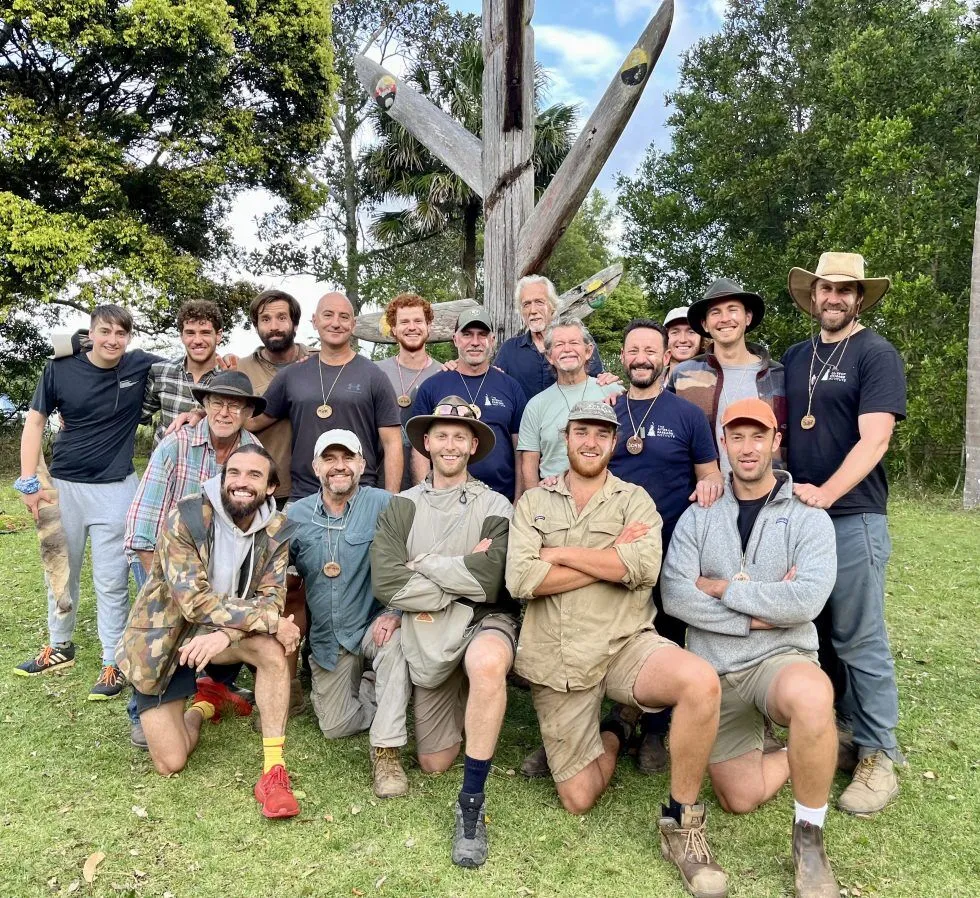
When asked what drew Mitch to become a facilitator with the Rites of Passage Institute, Mitch’s answer was clear: “It’s a confusing time to be young and male.”
He reflects on the challenges boys face today – conflicting expectations, outdated stories from past generations, and very few safe spaces where they can learn, make mistakes, and grow into the kind of men they want to become.
“There’s an inherent goodness in boys – it’s already there. Sometimes it’s buried, sometimes it just needs nurturing. When given a supportive environment, they show themselves to be kind, thoughtful, emotionally intelligent, and capable of deep respect.”
Mitch saw glimpses of this in his earlier work with The Man Cave, but longed for more time and depth. At Rites of Passage Institute camps, he found it: four days on the land, men across generations sitting in circle, weaving stories, accountability, and care.
The camps aren’t about sugar coating reality. Boys bring their full selves – their brilliance and their challenges. Mitch describes the delicate balance of creating a container that honours both:
“We allow space for the boys to be held accountable with curiosity around their less healthy behaviours. Rather than punish them, we ask: what’s actually going on? What’s behind this behaviour? That possibility of curiosity is transformative.”
Often, the boys labelled as “troublemakers” elsewhere become some of the strongest leaders at camp once given the chance to redirect their power in healthy ways.
At the heart of this is integrity. For Mitch, integrity means living the principles facilitators are trying to pass on: clearing tension in the team, embodying authenticity, and showing boys how men can treat one another with respect and honesty.
“Boys are like sharks for inauthenticity. They know when you’re not living what you’re teaching. They get as much from watching how we interact as they do from the conversations we have.”
This work has shaped Mitch profoundly. Leadership has challenged him to balance care and listening with firmness and directness.
“I used to think being assertive was dangerous. But I’ve learned that clear boundaries and directness can actually be the most loving path. Boys don’t relax until they feel the containment of those boundaries. That’s been a revelation for me.”
He’s also taken the rites of passage framework into his own life – creating ceremonies with friends around fatherhood, marriage, and other key life transitions. What began as professional facilitation has become a personal practice of marking and honouring life’s turning points.
The impact on camp participants is visible and moving. Sometimes it’s subtle – a boy standing taller, holding eye contact, expressing genuine gratitude. Other times it’s profound.
Mitch recalls one older teen who arrived resistant, disengaged, and carrying heavy challenges. By the end, he surprised everyone by declaring, “I didn’t need this right now, but when I have a son, I’ll bring him.” For Mitch, that was the ultimate compliment.
“Just seeing that spark—that something woke up in him, even if he wasn’t ready for it yet – told us the camp had an impact. He saw its value, and that’s remarkable.”
For Mitch, Rites of Passage work is about making space for a natural process of growing up – a process that’s always been part of human culture.
“Young people will always seek to test themselves, to find out who they are. If we don’t provide healthy ways for that to happen, they’ll find it elsewhere – and often in harmful ways. These camps simply provide a safe, intentional container for what would happen anyway.”
At its core, he says, this work isn’t mystical or complicated. It’s about listening, storytelling, and guiding young people with care and honesty through the thresholds of life.
And while rites of passage ceremonies are powerful, Mitch is clear they are not a “silver bullet.” The ongoing mentorship, relationships, and everyday support that surround these rites are just as vital.
As he puts it: “You can’t do this work with integrity without doing the deep inner work yourself. That’s what makes it real.”